Dom Tooze Counselling
Compassionate talking therapy in York
Life can be tough, and it can be so much tougher when having to face it alone. Maybe you're experiencing changes or difficulty with work, family, relationships, or something else - any of this might leave you feeling anxious, uncertain, or stuck.Counselling offers space to slow down and explore these challenges with honesty and curiosity. Together, we can explore how you experience things - how you are, and how you show up in relationships - which is often a vital step towards positive change.I aim to offer compassion, challenge, humour, and care, to help you develop your own insight.
About me
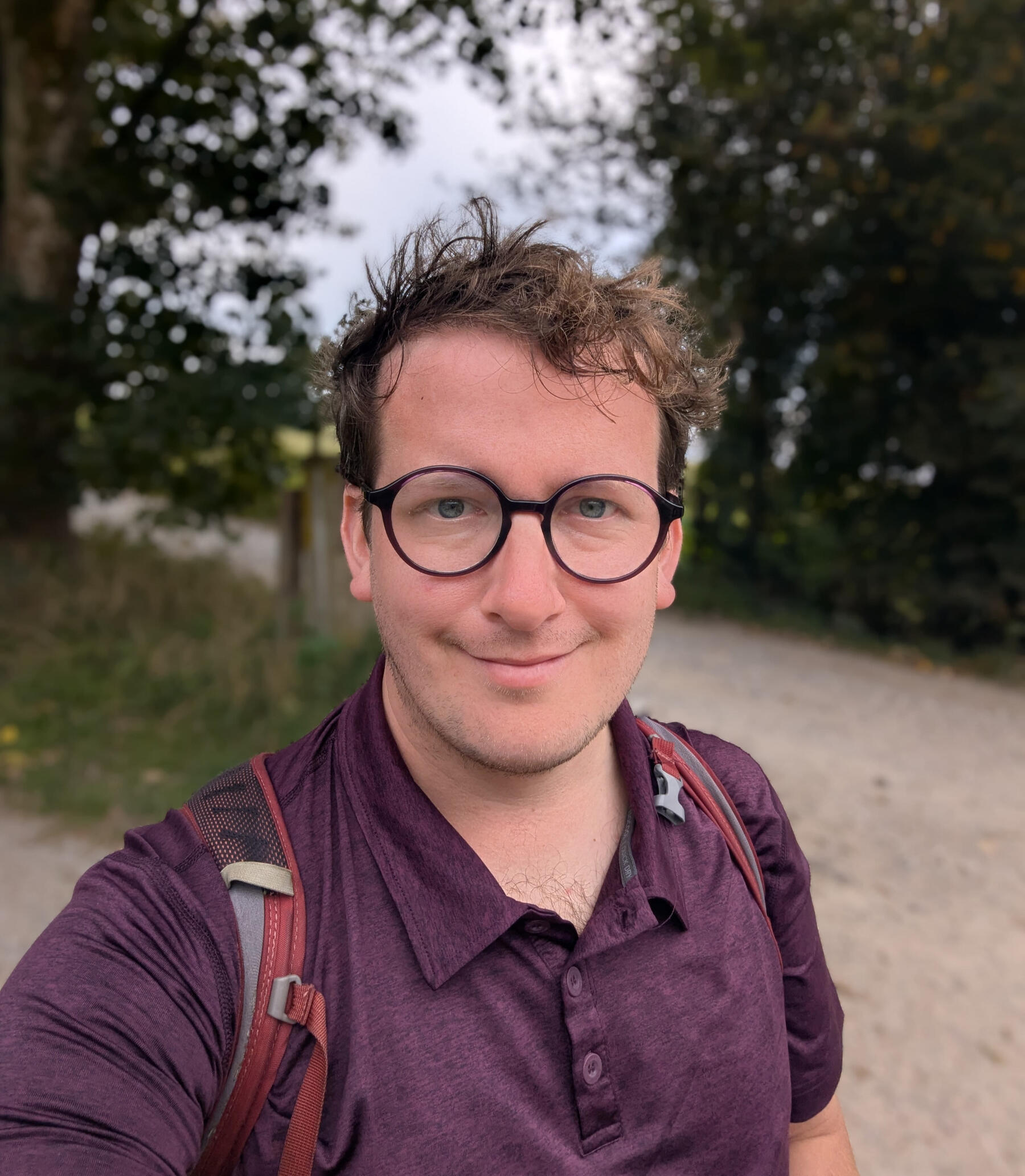
My route into counselling started when I first experienced counselling as a client. I found it genuinely useful to have somewhere to talk openly, feel listened to, and make sense of what was going on without feeling like I had to have everything figured out already.Before becoming a counsellor, I worked in education and the charity sector, supporting people in all sorts of circumstances. Those experiences taught me a lot about listening, relationships and the ways that the world around us can affect how we feel and how we see ourselves.I undertook Level 2 and 3 training with York Learning, and then started my postgraduate diploma in Humanistic Counselling at York St John University, gaining my qualification in March 2026. I have been working with clients since January 2024.
How I work
In my work, I don’t adopt a special ‘therapist persona’ - progress in therapy relies on a therapeutic relationship, and I bring myself to that. I’m not super formal, and while I take counselling seriously, I don’t think every session needs to feel completely serious. There’s room for humour, honesty, curiosity and the occasional bit of silliness. I might join you in a laugh, but I’m also able to offer a difficult question or gently challenge something when I think that might be useful.I work in a person-centred way, which means I will be led by you. I’m interested in your actual experience: what things feel like for you, what you notice, what you do, what you avoid, and what happens in your relationships.I also try not to get too hung up on therapy language - it can be helpful, but sometimes it can mask the real feelings we hold about things. Diagnoses and labels can be useful, and I don’t dismiss them, but I don't think the tell the whole story. I’m much more interested in what something means to you and how it affects your life.I’m also aware that not everything difficult in life comes from something within us that needs fixing. Work, money, relationships, discrimination, inequality, family, politics and the wider world can all have a real impact on how we feel and the choices available to us. I think it’s important that there is room to talk about those things in therapy, rather than treating every difficulty as something that needs to be solved within the individual.That’s particularly important to me in my LGBTQIA+ affirming and neurodiversity-affirming work. I want to understand the person in front of me, rather than making assumptions based on a label, diagnosis or idea of what someone is supposed to be like.My role isn’t to tell you what to think or how to live. I’m there to listen, help you make sense of what’s going on, and notice things alongside you. Sometimes that might mean reflecting something back that you hadn’t noticed, or asking a question that makes you stop and think. Sometimes it might just mean sitting with something that’s difficult. We can take what brings you to therapy seriously without having to make everything feel heavy or overly clinical.
As a person, and in my practice, I am particularly conscious of the themes below.
Social JusticeFundamental to my training and my practice is a belief in social justice: in recognising and using privilege to help those without it, and to help marginalised people empower themselves.
ConnectionI believe in the power of connection. Connecting to different parts of oneself, connecting to those around us, and connecting to society as a whole. When we're struggling to do any of these, it can be challenging to live well.
Nature and ClimateI believe in the deep interconnectedness of people, place, and planet. The climate crisis is not just environmental—it’s also personal, social, and emotional. I work to hold space for the grief, anxiety, and hope that can arise in response to ecological breakdown and injustice. I’m committed to practicing in a way that honours sustainability, inclusion, and care for the world we share.
Fees & getting started
If you'd like to get started, just follow the steps below!Step 1: Send me a brief email at [email protected]Step 2: We’ll arrange a free 15-minute introductory chat online or over the phone - there's no commitment here, so feel free to book this even if you're unsureStep 3: We decide if we’re a good fit and book your first full session.
Sessions take place in the centre of York (often using counselling rooms at the Quaker Meeting House), and I also offer Walk & Talk therapy and/or online sessions
Fees
My standard fee is £60 for a 50-minute session.
I also reserve a small number of spaces at a reduced fee for people who would otherwise be unable to access counselling because of their financial circumstances. These spaces are limited, but if paying the standard fee would be a genuine barrier, please feel free to get in touch and we can talk about what's possible.I offer face-to-face sessions from a quiet, accessible counselling room at Friargate Quaker Meeting House, a short walk from York station. I also work online, via video call, and can offer walk & talk therapy in the centre of York.
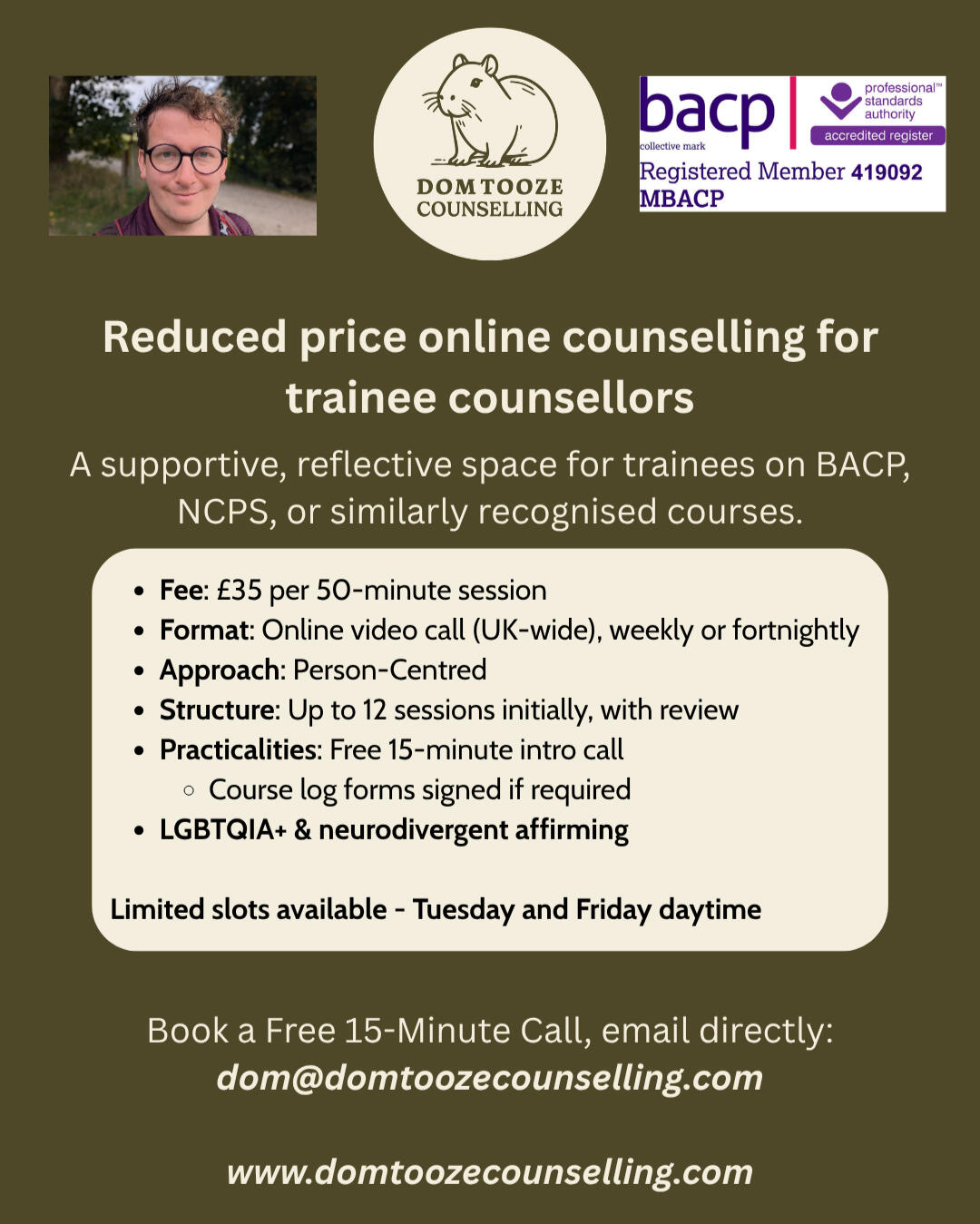
Counselling trainee offer
Frequently asked questions
What happens in a first session?You don't need to arrive with everything figured out. We'll spend some time getting to know each other, talking about what's brought you to counselling and what you might want from it. I'll explain a bit about how I work and give you plenty of opportunity to ask questions.It's also a chance for both of us to get a feel for what it's like to sit together. You don't have to know straight away whether I'm the right counsellor for you.What if I don't know what to talk about?You don't need to come to counselling with a neatly organised list of problems.You might know exactly what's brought you in, or you might just have a feeling that something isn't quite right. You might have loads to say one week and absolutely nothing the next. That's all okay.We can start wherever you are and work things out together. You don't need to be ‘good at counselling’ to have counselling.How often would we meet?For most people, I'd suggest meeting weekly. Having a regular time gives us some continuity and means you don't have to spend the beginning of every session trying to remember where we left off.I'm also happy to work fortnightly where that makes more sense for you. Counselling isn't one-size-fits-all, so we can talk about what works for you and your circumstances.What if I don't know whether you're the right counsellor for me?That's actually a really important question.I'm not going to be the right counsellor for everyone, and that's okay. The relationship between counsellor and client matters, so it's worth paying attention to how you feel when you're talking to someone.You can read about how I work, get in touch with any questions, or arrange a first session and see how it feels. You don't have to force a connection that isn't there.I've also put together a short guide to choosing a counsellor, with some things you might want to think about when deciding who you'd like to work with. Read the guide →Can I stop counselling whenever I want?Yes. You don't have to make a long-term commitment when you start counselling. For some people, counselling might be a short stint to help them through a tricky time. For others, it can be an ongoing space for reflection.If you decide you'd like to stop, we'll ideally have a conversation about it rather than simply disappearing into the night. But ultimately, it's your choice.Do you offer online counselling?Yes. I offer counselling both online and in person in central York.We'll talk about what works best for you. Some people really value being in the same room; for others, talking from their own space feels much more comfortable.What happens if I need to cancel?Life happens. If you need to cancel or rearrange a session, just let me know as soon as you can.I ask for 48 hours' notice of any cancellations. Sessions cancelled with less notice will be charged, so we'll talk about the details when we arrange our sessions.Is everything I say confidential?What you tell me is treated as confidential, and I won't routinely share what we talk about with other people.There are some important limits to confidentiality, which I'll explain when we start working together. You won't be expected to memorise a load of small print before your first session, but I'll make sure you understand what confidentiality means and where those limits are.
Who I work with
Here are some of the organisations I have worked with, as a counsellor.


I believe in the power and importance of cooperation and I am always willing to explore new partnerships - contact me if you are interested in working together.